
Rubber Banditz Band Review

Training bands are among the most versatile pieces of equipment you have in your equipment arsenal.
They can be used for training on their own, as assistance for bodyweight training, or to change the strength curve and direction of resistance with free weight training.
There are many different brands of bands on the market today, all with varying quality and durability. Some are very well made while others are just accidents waiting to happen.
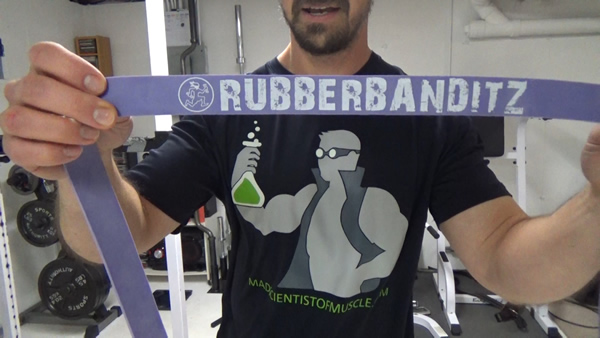
In this video, you'll discover how Rubber Banditz bands stack up.
|

Get Your Rubber Banditz Bands Here
Rubber Banditz Quality of Construction
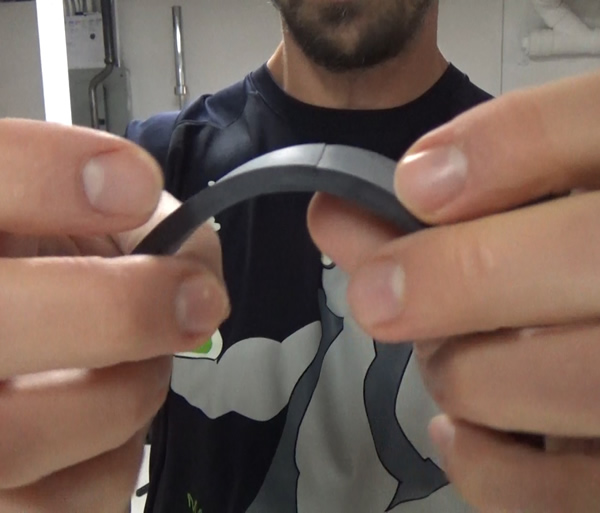
One of the most important features of the bands is the layering and the offset seams. You can see where I'm holding up the band that there is a seam visible on the very top layer.
The key thing to note with these bands is that this seam does NOT go all the way down through the band. Naturally, you have to have a seam somewhere...and it's in a different place in each layer of the band material.
This means there is no real weak link in the band. You can use these bands with confidence, even with exercises where the bands are supporting your bodyweight.
Snapped bands can be extremely dangerous and you absolutely want to be sure the bands you're using don't have any defects that could result in breakage under tension.
Rubber Banditz Band Surface
I also quite like the surface feel of the bands...they're not too tacky/grippy, meaning you can hitch them and unhitch them relatively easily with the surface binding onto itself too much.
This smooth surface also means if you're doing exercise where the band contacts your skin, it's not going to pinch or pull out leg hairs.
Any Downsides to Rubber Banditz Bands?
In terms of these exact bands? No. They're an excellent product.
Honestly, the only downsides I would associate with these bands would apply to any band training in general...the resistance curve.
When you're doing band-only training, you get basically zero resistance when the band is just starting to stretch. This point is generally at the stretch position of an exercise, which is one the best positions for working a muscle.
Personally, I prefer using bands in addition to free weights in order to modify the strength curve of an exercise (like when squatting and the bands add extra, increasing resistance as you come up to lockout) or to provide directional resistance (like pulling diagonal up and back on a deadlift with bands hitched in front of you and down low).
Conclusion:
Overall, Rubber Banditz bands are definitely highly recommended. They come in a wide variety of sizes and resistance levels, and the company offers a lot of useful accessories to help you get more out of your band training.
On their site, you'll also find an excellent "band finder" app to help you decide which bands you need.
Get Your Rubber Banditz Bands Here
More From Fitstep.com
Site Search

Subscribe to my YouTube Channel
And see every new exercise and training technique when it's released!
Recommended For You...
Return To Prime

Build muscle and strength like you did 20 years ago by turning back your physiological "muscle clock." This revolutionary approach to training will keep you strong and muscular like aging never even happened.
Learn the secrets to building muscle after 40, 50, 60 and beyond!