
Hip Flexor Muscle Anatomy

The Iliopsoas actually consists of two muscles: the Iliacus and the Psoas Major. Together, they are known as the Iliopsoas.
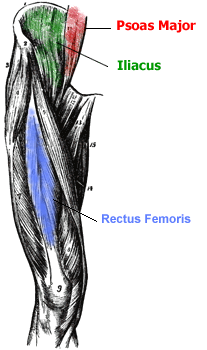
Anatomy Chart courtesy of FCIT
The Iliacus originates on the pelvic crest and attaches on the femur.
The Psoas Major, the longer of the two muscles, originates on the lumbar vertebrae and attaches to the femur.
The Rectus Femoris is also a hip flexor. It is one of the four Quadriceps muscles and the only one that crosses the hip joint. This crossing of the hip joint enables it to operate as a hip flexor as well as a knee extensor (straightening the knee).
Overdeveloped and tight hip flexors can contribute to lower back pain by causing the pelvis to tilt forward. To counteract this, you must stretch the hip flexors and strengthen the Abdominal muscles. This will reduce pelvic tilt and decrease lower back pain. Strengthening the lower back can also help improve the balance between the muscles of the hip region.
Functions of the Hip Flexors
The function of the Iliopsoas is hip flexion, which means bringing the thigh up towards the abdomen. The hip flexors are also active when the abdomen is being moved towards the thighs, e.g. sit-ups
Hip Flexor Exercises
Exercises that work the Hip Flexors include:
- Sit-ups
- Leg raises
- Hanging leg raises
- Resisted hip flexion
Visit the Abdominal Exercise Index for more movements that work the hip flexors, in addition to the abdominals.
More From Fitstep.com
Site Search

Subscribe to my YouTube Channel
And see every new exercise and training technique when it's released!
Recommended For You...
Time-Volume Training

Build muscle and strength like clockwork, even with very limited equipment, or NO equipment at all. This unconventional approach even builds muscle with light weight, saving your joints and nervous system from overload while you build mass fast.
Build muscle like clockwork now...