
Are Nightshades Contributing to Your Health Issues?
TL;DR Nightshade Foods and Health Issues
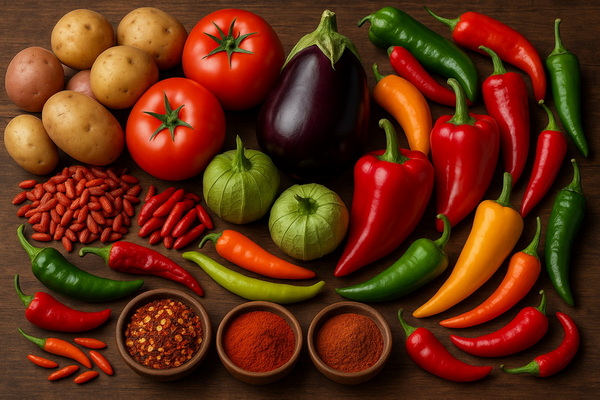
- “Nightshades” are plants in the Solanaceae family—potatoes, tomatoes, eggplant, most peppers, tomatillos, goji berries and pepper-based spices like paprika, chili powder and cayenne. Tobacco is a nightshade too.
- They’re rich in vitamins and minerals, but also contain glycol alkaloids (like solanine) and small amounts of nicotine, which help the plant defend itself and may aggravate problems in some people.
- Alkaloids are not water-soluble and can take 2–3 months to clear, so they may build up over time. In susceptible people, they may contribute to muscle and joint pain, spasms, increased inflammation, gut irritation (“leaky gut”), skin reactions or even heart palpitations and dizziness.
- If you live with autoimmune disease, arthritis, chronic muscle pain or migraines, a temporary nightshade elimination is low-risk and might reveal a surprising trigger—even though the science is still catching up.
Issue #5 - Foods in the Nightshade Family
Nightshades are more than the deadly poisons you see in the movies or read about in novels and Shakespeare's plays. They are plants from the Solanaceae family that we eat on a daily basis.
They have a lot of vitamins and minerals that are great for us but they also contain chemical compounds that have the potential to hurt us.
Potatoes, tomatoes, many varieties of peppers, eggplants, tomatillos, goji berries and pepper-based spices like chili peppers, paprika and cayenne are nightshades. And, it might surprise you to know that tobacco is also a nightshade.
What isn't a nightshade?
Sweet potatoes and yams, white and peppercorns, and Chinese Sichuan (Szechuan) peppers are not nightshades.
Nightshade plants contain chemical compounds called glycol alkaloids that defend the plant from pests and pathogens like insects, fungi and bacteria.
These compounds can hurt us as well.
They are poisonous to cats and dogs so keep that in mind when reviewing the ingredients of your pet food. There are a number of alkaloids in this plant family, but I will focus on solanine and nicotine in this article.
Nightshades were introduced into our diets long before testing for safety was ever a consideration. Many came from South America and weren't introduced to western Europe until the 1500's.
Even then, western Europeans wouldn't eat them for another 200 years. In fact, tomato plants were considered decorative for a long time.
How can nightshades affect us?
First, don't panic, they aren't something that will hurt every person who eats them. They can, however, adversely affect some people. I am sharing this topic with you because you might be negatively affected and not even know it.
The alkaloids can act as a neurotoxin in humans.
They are not water soluble. Since it takes 2-3 months to be eliminated from your body, they accumulate over time. These alkaloids inhibit an enzyme called cholinesterase that contributes to the agility of muscle movement.
Slowing down this enzyme can result in muscle pain, spasms, joint pain and swelling. These compounds can increase inflammation in your body and damage your intestinal lining (leaky gut) which can adversely affect a person who is living with an autoimmune disease or has difficulty digesting dairy products or wheat. Basically, if you already have inflammation in your body, they have the potential to make it worse.
Have you ever seen a potato that has a green peel or sections of green peel?
Green means solanine. Green means a lot of solanine. It's why you might have been told to stay away from green potatoes.
Cutting the green out isn't enough as solanine is found throughout the whole potato. Do not eat green potatoes!
There are many documented cases of people poisoned by eating potatoes that had high solanine levels. The green color comes from chlorophyll, which means the potato has been exposed to light. Light and warmth increase solanine content in potatoes. Cooking nightshades does not affect or destroy solanine. You would have to cook the entire potato to a temperature of 470 degrees F, which would make it inedible.
What about tomatoes?
Green tomatoes have more solanine so there is less of it in vine ripened tomatoes because solanine converts to sugar as the tomato ripens. Green bell peppers have more solanine than yellow bell peppers and yellow peppers have more than red bell peppers.
I mentioned nicotine earlier.
Tobacco isn't the only nightshade that contains nicotine. They all do.
Maybe that's why you hear the phrase “you can't eat just one potato chip.” The average nightshade eater will consume the equivalent of 1 cigarette worth of nicotine every two weeks.
If a person is trying to quit smoking, that person would benefit from not eating nightshades as well in order to completely avoid nicotine.
People can experience short term effects and/or long term effects.
Short term side effects from nightshades can include digestive issues like diarrhea, heartburn, nausea and bloating. They can even cause dizziness, heart palpitations, skin rashes and vision problems. The long term effect of inflammation, specifically related to arthritis, is the most common reason people cut nightshades from their diet.
What's the connection between migraine headaches and nightshades?

Inflammation plays a role in migraines and nightshades can increase inflammation. There is currently no scientifically proven direct casual link to nightshades, but there have been studies showing promising results when people who suffer from migraines eliminate nightshades from their diet.
There's plenty of anecdotal information out there, thoughl.
If you get migraines, that might be enough for you to think about trying the elimination diet or at least tracking what you eat and when you get migraines to see if they could be a trigger for you.
What does the science say? Is there definitive proof that nightshades can hurt you?
No, not at this time.
An older study from the early 1990's claimed a strong connection between nightshades and arthritic pain but that study's scientific approach has now been criticized. You will find sources saying there's no connection between nightshades and inflammation and sources saying there is.
Nightshades are now being studied to see if there is a connection to IBS/IBD (Irritable Bowel Syndrome/Disease).
The Guma Lab at the University of California, San Diego, created the ITIS Diet, which includes the elimination of nightshades among other recommendations, to help people with rheumatoid arthritis. There are doctors, naturopaths, dietitians and other health professionals who recommend removing them based on the experiences of their patients.
Even Tom Brady (love him or hate him) excludes nightshades from his TB12 Method diet. I think that there's enough information out there to cause a person to consider eliminating nightshades for a trial period. The worst that can happen is that nothing happens.
My experiment with foods from the nightshade family began more than ten years ago when I couldn't find anything to help me with my muscle and fascia pain.
Nothing doctors suggested or prescribed helped with the pain.
I was never prescribed any kind of opiate for the pain so I can't say if that would have helped. It took hours for me to fall asleep because I was in such pain and so uncomfortable.
During my research, I came across nightshades and the toxins found in them.
What I found at that time was a reference to that early 1990's study claiming nightshade foods increased arthritic joint pain and how 75% of people found that removing these foods from their diets decreased their joint pain or even put them into remission. I didn't have specific joint pain and no doctor had determined that I had arthritis, but I thought maybe it was worth a try to see if eliminating these foods could at least take the edge off my muscle pain.
I had nothing to lose but the enjoyment of eating french fries and pasta sauce for a few months. It was a pretty straightforward test. I just had to stop eating certain foods for a few months, then add them back into the diet one by one to see how I felt.
It's a simple yet difficult test. It sounds easy to just not eat potatoes and tomatoes and peppers.
I quickly discovered that finding something on the menu at a restaurant could be challenging and that so many foods in the grocery store include one or more of these foods.
I had to be really careful when reading labels.
Certain soups, BBQ sauces, salsas, and pasta sauces were on the “no” list. Spotting “tomato” or “potato” is easy but what's in the generic term ”spices”? “Spices” could include a pepper based spice like cayenne or paprika.
Potato flour also appears in a lot of items, including gluten free flours and as a filler in supplements.
I found a recipe to make pasta sauce without using tomatoes. It's cleverly named “nomato sauce”. It's celery, carrots, onions, spices like oregano and basil, and if you want a bit of red color, beets. I excluded the beets because I preferred the taste of the sauce without it. It was easy to replace potatoes with sweet potatoes or yams.
After 2 months of staying away from Nightshades, I was ready to evaluate where I was at.
I felt like my pain had decreased somewhat but sometimes you need to reintroduce something or, in the case of a supplement, stop taking something in order to really see if something feels different.
One of the doctors I was consulting with said in order to get a true picture of how it felt to reintroduce a food, I would need to eat a good portion of it at least three times in a two day period.
For example, tomatoes at lunch and dinner and then lunch the next day. I started with potatoes and found my pain increased a bit. I tried tomatoes next and wow, did I feel it! After three meals, my muscles were absolutely burning with pain. The same happened with peppers.
That was enough for me to determine that it was in my best interest to keep nightshades out of my diet as much as I could. I kept them out of my diet 98% of the time for a couple of years and my pain level was decreased.
I say 98% because there were times that I didn't know it was in the food I ate before I ate it or when I was a guest at someone's table and it was going to be an awkward situation if I brought it up.
At this time, I periodically eliminate them from my diet but not for long periods of time. I feel like I have decreased the overall amount of nightshade toxins in my system and I am better able to deal with them.
If you are living with an autoimmune disease, arthritic joint pain or muscle pain, or deal with migraine headaches, you might want to consider removing these foods from your diet for awhile or doing some more reading about it.
You might be surprised to discover that it makes a positive difference for you.
It's a straightforward experiment. Stop eating nightshades and then start eating them again one by one after two months.
But when dining with other people or at a restaurant, be prepared to explain to others what nightshades are. Lots of people aren't familiar with the term nightshades or which foods are classified as nightshades.
During the elimination period, be mindful of how you feel at regular intervals, like once a week, then evaluate the results of reintroducing them.
Just because there aren't conclusive scientific studies at this time, doesn't mean there won't ever be. By taking things into your own hands now, you might discover for yourself what science might tell you years from now.
Why wait? It's not going to hurt you to try it and you might discover you feel better.
Stay tuned for the next issue of Good Health...Under Construction where I write about creatine supplementation and my experience with it.
Nick's sister, Alexis
More From Fitstep.com
| Stink Training for Bringing Up Weak Bodyparts | |
| Fat Loss Circuit Training With Dumbbell Crawling | |
| The Great Big List of Calorie-Free Foods | |
| 4 Tips For Larger, Firmer, Rounder Glutes |
Site Search

Subscribe to my YouTube Channel
And see every new exercise and training technique when it's released!
Recommended For You...
The Starting Monday Diet
Learn how to eat for fat loss WITHOUT losing muscle or strength. This simple, week-based diet program will get you ripped AND strong. This is the best "no guilt" diet program I've ever put together.
Discover the easiest way to get lean and KEEP your muscle...